A journey with two characters and one player
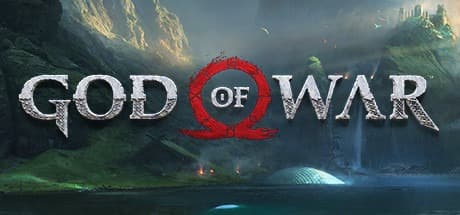
God of War for Windows brings the adventure first released in 2018 to PC. Kratos is living far from his Greek past and travelling with his son, Atreus, through a world inspired by Norse mythology. Their conversations and disagreements matter alongside the battles. This is the starting point of their Norse story, not God of War Ragnarök and not a collection of the older Greek games. The Windows edition was released in 2022; those dates identify releases rather than the current installed build.
Atreus accompanies the journey, but this remains a single-player game. You direct Kratos and issue commands that let the boy contribute during encounters. There is no second-player campaign hidden behind the companion system. The close camera makes attacks feel immediate while also requiring attention to enemies outside the centre of the screen. Learning when to turn, defend and create space is more useful than simply repeating the longest attack combination.
Work with the axe, shield and companion
The Leviathan Axe can be used in melee or thrown and recalled. That makes it both a fighting tool and a way to interact with certain environmental mechanisms. Shield defence and evasive movement offer different responses to danger. Spend the opening encounters learning their timing before committing to aggressive equipment choices. When a fight becomes confusing, reduce the number of enemies around Kratos rather than chasing one target across the arena.
Atreus has his own skills and equipment, so spending every resource exclusively on Kratos overlooks part of the combat system. His bow can support your attacks and help create openings. Read the descriptions of upgrades before purchasing them: an improvement that suits a frequently used action has a clearer purpose than one bought simply because it is available. The bestiary also provides useful observations about enemies encountered during the journey.
Explore with a purpose
The route combines story-led passages with areas that invite optional investigation. Side quests, called Favors, provide more context for characters and can reward equipment or progression. Some obstacles are designed for a later return once the necessary ability is available. If a chest or path seems inaccessible, continuing the story can be more productive than searching the same corner indefinitely. Keep track of the location and revisit it when your tools change.
Equipment offers several attributes rather than one universal measure of quality. Strength, runic capability, defence and cooldown can support different approaches. Compare what a replacement actually changes before dismantling or abandoning a familiar piece. Players seeking a large roaming adventure with sailing and urban infiltration can also consider Assassin’s Creed IV Black Flag; its pirate campaign has a different structure from this more focused father-and-son journey.
Prepare the Windows edition
The published minimum configuration includes 64-bit Windows 10, 8 GB of RAM and a GTX 960 or Radeon R9 290X with 4 GB of graphics memory. Installation storage is listed as 70 GB, with an SSD recommended. These are game requirements, not the size of an external download. DirectX feature level 11_1 matters as well: the operating system reporting a recent DirectX version does not automatically establish that the graphics adapter supports every required feature.
Keyboard and mouse bindings can be changed, and compatible controllers are supported. Begin with a graphics preset appropriate to the machine, then compare a busy encounter after changing one demanding option. High resolution, ultrawide output and unlocked frame rates are capabilities rather than performance guarantees. NVIDIA DLSS and Reflex depend on supported hardware. Aim for consistent response during combat, then increase visual detail if the system has room.