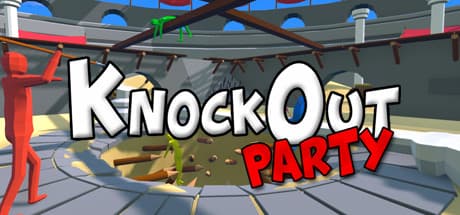
An arena where the scenery can hit back
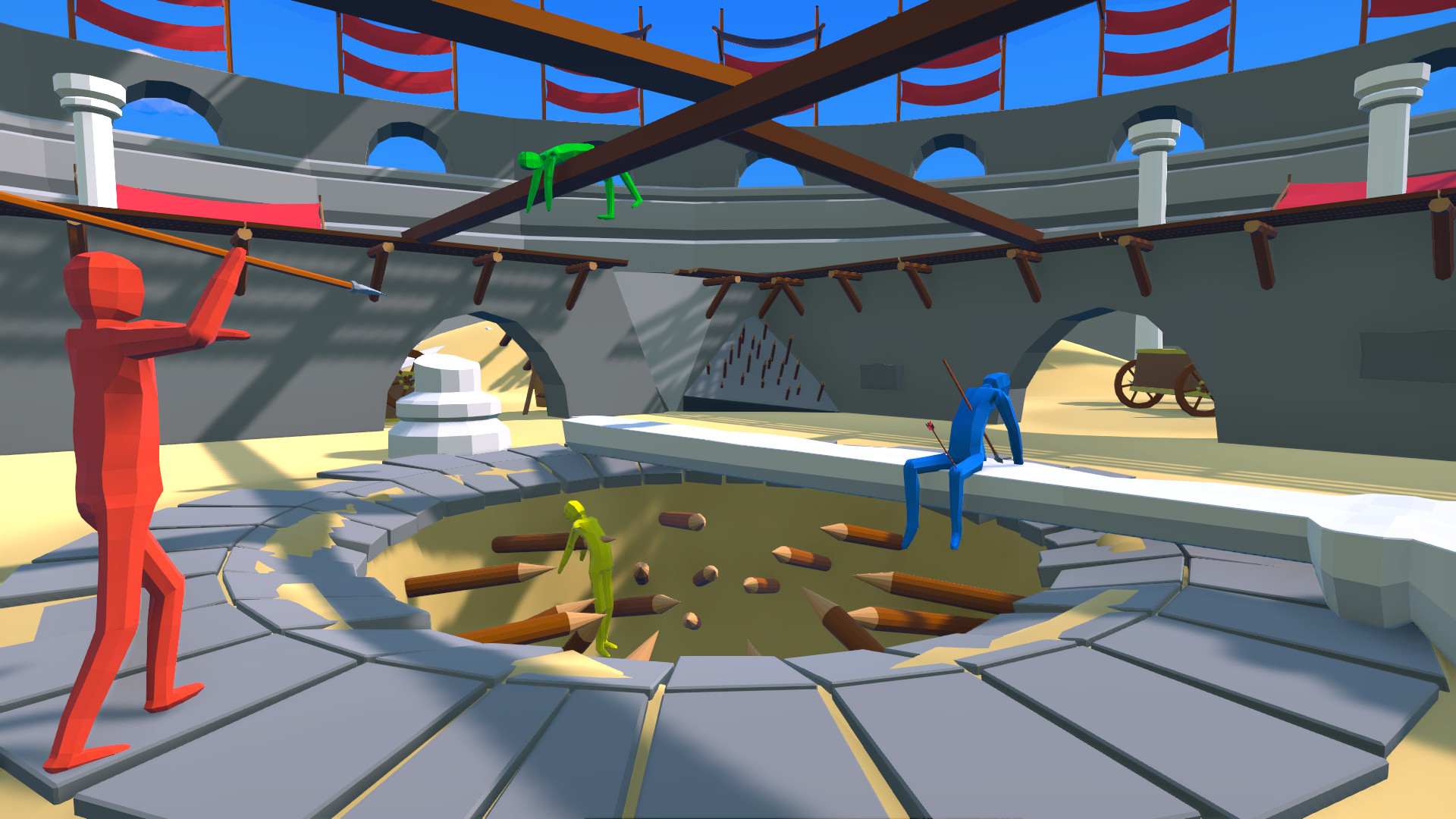
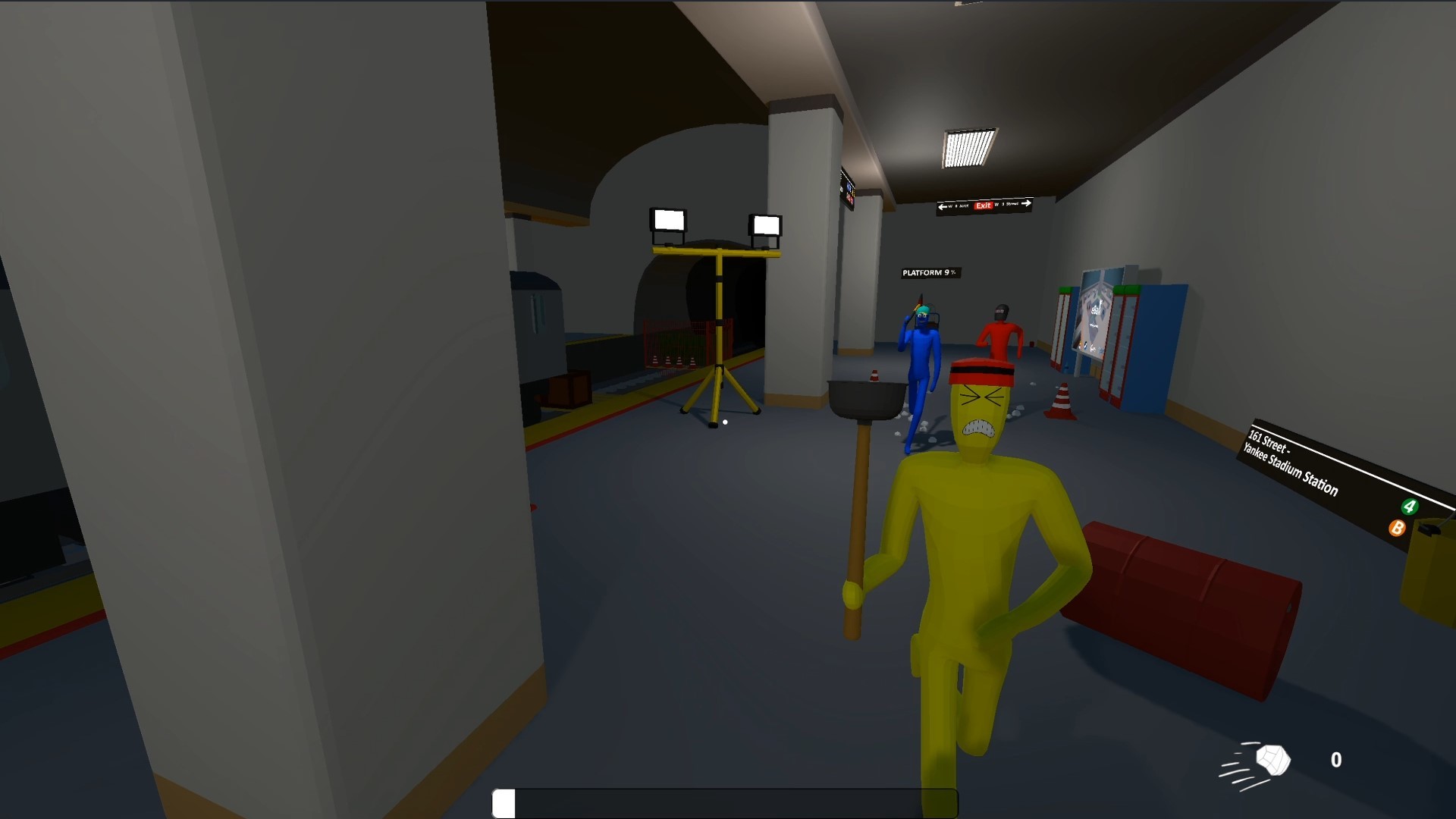
Knockout Party is a physics-based fighting game from Toxic Studio. Instead of focusing only on a precise sequence of attacks, its arenas bring characters, loose objects and weapons into the same physical contest. A barrel can become part of an encounter, and a stumble can change where a fighter ends up. The attraction is reacting to that changing situation while trying to knock out the other players.
The paid game entered Early Access on May 15, 2020, and its full release followed on September 11, 2020. The current store page presents a released game, so an old Early Access date should not be treated as its present development status. Online arena battles support up to four players, with the description inviting matches against friends or other participants.
Learn how movement interacts with objects
Start by giving yourself room to observe the character's physical response. Position matters when the arena contains movable objects: approaching a rival from one direction can produce a different collision from charging through a crowded space. Watch the surroundings as well as the opponent, because something displaced during the fight may affect the next movement.
Unarmed attacks, melee weapons and thrown weapons provide several ways to engage. The official examples include a hammer and a baseball bat. Try one type at a time to understand how reaching a target differs from attacking empty space. Picking up a weapon is only part of the decision; being in a useful position to apply it is the next part.
A group learning together can use the first encounters to compare movement and attacks before settling into a more competitive rhythm. Giving each other time to recognise an unfamiliar map can make later rounds easier to follow. The game's physical comedy comes from situations that emerge during contact between characters and scenery, so pay attention to the result rather than only the button pressed.
Fake death is also a movement tool
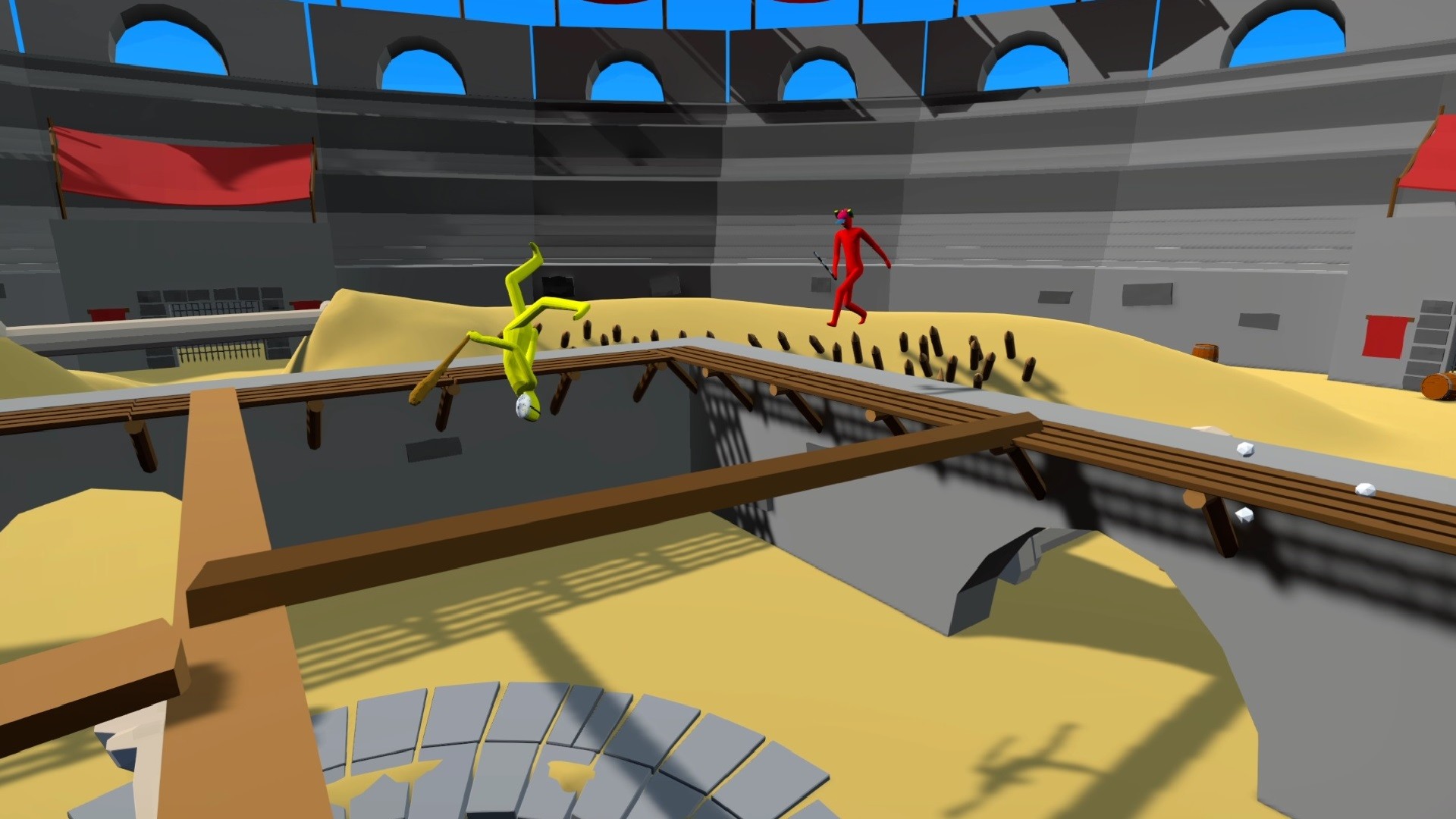
The fake-death feature lets your character pretend to be dead. The developer specifically presents it as a way to overcome obstacles differently and take shortcuts, as well as part of the arena's physical behaviour. It is therefore worth exploring outside the immediate rush to hit another fighter. Notice what changes in the body's position when you use it near an obstacle.
Think about the place where you will end up before choosing an unusual route. A shortcut is useful when it gives a better position for the next action, not simply because it looks different from walking. Practising the technique in a recognisable part of a map helps connect the command to a spatial result you can use later.
Different arenas change the encounter
The thematic settings range from ancient-Rome-inspired scenery to skyscraper rooftops. Looking around a new map is part of learning its fights: the available space and objects influence how you approach a rival. A habit developed in one arena may need adjustment when the next offers a different arrangement of obstacles and routes.
For another game where awkward movement and direct competition are central, Getaway Shootout uses jumping to race towards an escape point. Its documented two-player setup shares a keyboard locally, which differs from Knockout Party's advertised online arenas. If your group would rather cooperate than fight, Toxic Studio's The House Always Wins lets friends divide the work of running a casino.
Arrange the session and check Windows
Plan this as an online multiplayer game rather than assuming local split-screen or an offline solo campaign. If you want a predictable group, arrange the session with friends and check joining together before setting aside time for a longer evening. The store's online label describes the mode; this review does not include a live test of current matchmaking or player availability.
The listed minimum is a Core i3, 4 GB RAM, graphics with 1 GB VRAM, DirectX 9 and 5 GB of available storage. The processor generation and precise graphics model are unspecified. The historical Windows 7-or-later requirement also needs to be read alongside the current Steam client's requirement for Windows 10 or later. Five gigabytes is disk space for the game, not a verified download archive size.