
A civilisation game built around decisions
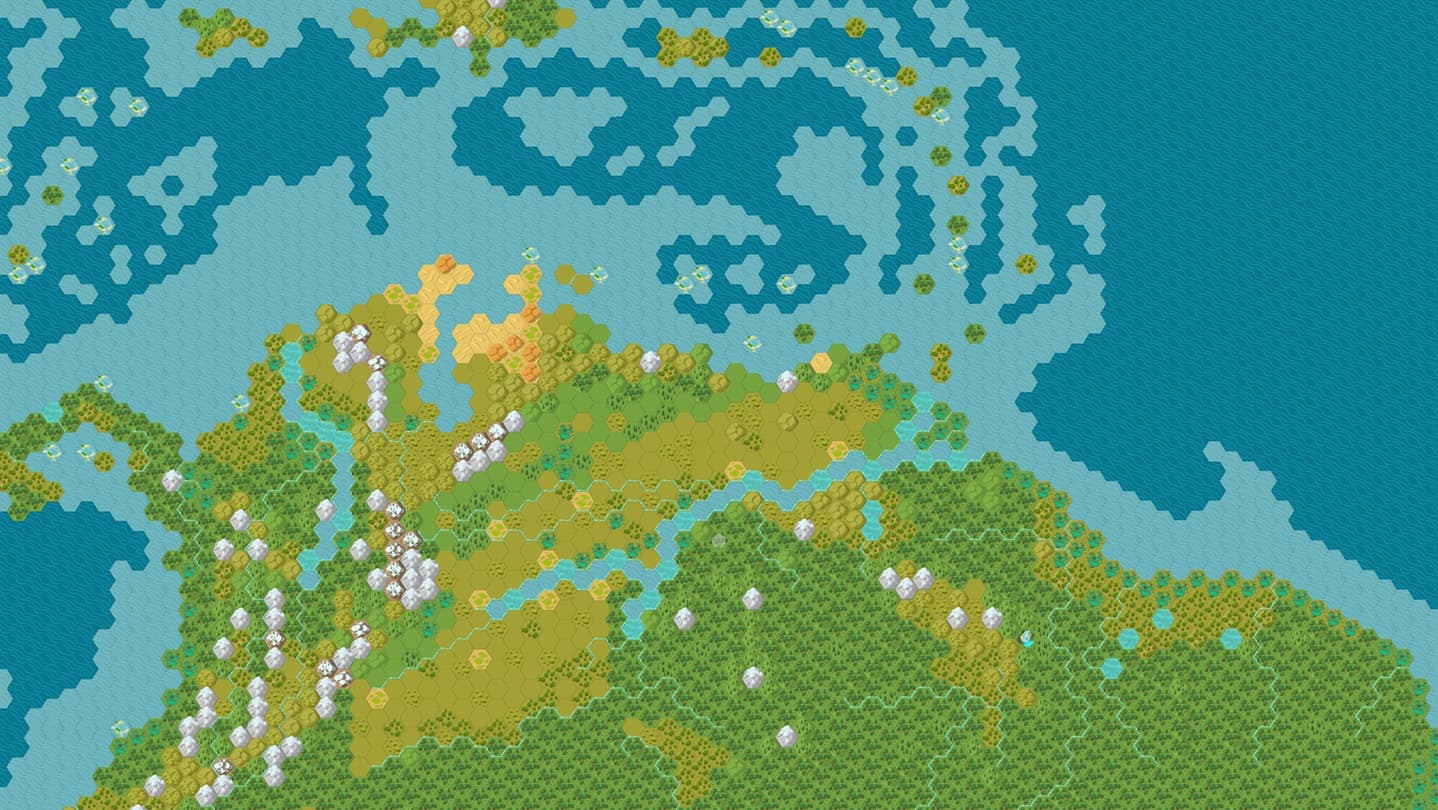
Unciv puts the growth of a civilisation on a readable map rather than inside a cinematic presentation. You found cities, develop surrounding land, research technologies and deal with other powers. The rules are inspired by Civilization V, but Unciv is an independent open-source project with its own implementation and development priorities. It is not a free licence for the commercial game.
The turn-based structure gives you time to understand why a city is struggling or an army is exposed. Several decisions compete for the same resources, and a choice that helps immediately can delay a longer plan. The appeal comes from connecting those consequences across many turns, not from reacting quickly to an event on screen.
Set up a first game you can follow
A smaller map with fewer opponents makes the early relationships easier to observe. Choose a manageable difficulty and avoid installing a large collection of rule-changing mods before learning the base systems. Those settings are not a judgement of skill; they reduce the number of unfamiliar variables you must understand at once.
Read the available descriptions when choosing a civilisation and starting conditions. Bonuses matter most when they support how you intend to play. A benefit linked to a particular activity may contribute little if your location or immediate priorities lead elsewhere. The in-game reference material can explain an unfamiliar building or unit before you commit several turns to producing it.
Make the first city support the next decision
Food, production and other yields serve different purposes. A city that grows quickly still needs the capacity to finish useful buildings and units. Examine which tiles are being worked and what their improvements provide. An attractive resource on the map does not automatically contribute the way you expect if the city cannot use or improve it yet.
Research should connect to a practical objective. Opening access to an improvement, defensive unit or important building is more meaningful when you know where it fits. Avoid treating every available technology as an isolated upgrade. A simple plan for the next several turns can help you recognise when expansion is affordable and when an existing city needs attention first.
Explore before making commitments
Scouting reveals terrain, neighbours and potential settlement sites. It also gives context to diplomatic decisions: a nearby rival and a distant civilisation create different pressures. Keep military units positioned to protect useful territory, rather than sending everything away because the first turns appear peaceful.
War is only one part of the strategic picture. Economy, diplomacy and the chosen victory conditions shape what progress means. Review those conditions at the start of the match so the middle game does not become a collection of unrelated projects. If you prefer immediate vehicle combat and base construction, Warzone 2100 offers a real-time approach instead.
Use the clear presentation without underestimating the simulation
Unciv's modest visual style can be attractive on less powerful computers, but large maps, many civilisations and complex mods still increase the workload. Try a small game before assuming the largest configuration will behave the same way. For a different form of planning built around factory throughput and defence, Mindustry changes both the pace and the subject.
Windows packages are available through the project's release channels. Keep a copy of important saves before changing versions or rulesets, and check the requirements of the package you choose. Once the basic economy is understandable, expand the map or experiment with modifications one change at a time, so you can identify what actually changed the experience.