Three forms with different jobs
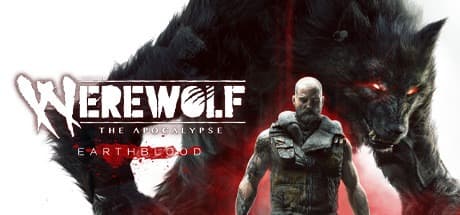
Werewolf: The Apocalypse — Earthblood puts Cahal’s ability to transform at the centre of its action. Walking into an occupied area as a human, moving through it as a wolf and confronting its defenders as Crinos are different decisions. The appeal lies in that change of scale: a quiet approach can become a forceful close-range fight when the situation calls for it. This is a single-player adventure, rather than a cooperative werewolf pack simulator.
Cahal is a Garou whose exile followed a loss of control over his rage. His opponents include Endron, an oil company connected to the destructive Wyrm. The setting belongs to World of Darkness, where the environmental conflict also has a supernatural dimension. You follow an established protagonist and his struggle; the game does not ask you to create a complete tabletop character before beginning the campaign.
Decide what the next space requires
The human form handles conversations and interaction with machines. The wolf provides a way to slip around enemies, while Crinos is the large combat form built for direct confrontation. Think about the immediate objective before transforming. Reaching a useful interaction point and defeating everybody nearby are not necessarily the same task, even when both routes eventually involve the same room.
A sensible first approach is to look for the route, identify what requires interaction and understand where opponents can notice you. Once combat begins, attention shifts to spacing and the direction of attacks. The existence of a stealth form does not mean that the whole adventure becomes a detailed espionage simulation; equally, the powerful combat form does not make observing a location pointless.
Build around the actions you actually use
Progression provides abilities through a skill tree, with combinations of attacks and a rage system supporting combat. Read the effect of an upgrade in relation to a recurring situation. An improvement that supports a move you recognise is easier to evaluate than one selected simply because it appears later in the tree. Cahal’s destructive power is also a narrative concern, so the rage theme shapes more than the visual design.
Players looking for another third-person action campaign can compare God of War. Its axe combat and father-and-son journey create a different rhythm from Earthblood’s movement between human, wolf and Crinos forms. The comparison is useful for choosing a style of adventure, not for expecting identical equipment, character relationships or world structure.
Check the Windows configuration
The published minimum requires 64-bit Windows 10, a Core i5-3470 or AMD FX-8370, 4 GB of memory and DirectX 11. Graphics examples are a GeForce GTX 650 with 1 GB or Radeon HD 7790 with 1 GB. Storage is listed as 12 GB. That capacity is an installation requirement, not a measurement of the file behind the download button.
The recommended configuration raises memory to 8 GB and lists Core i7-8700 or Ryzen 5 3600X, alongside GTX 780 with 3 GB or Radeon R9 290 with 4 GB. Compare the actual graphics model, not only the memory total. A modest RAM minimum alone is not evidence that every office laptop will offer comfortable play, and this page does not claim benchmark results.
Match the edition to the intended content
The game is a paid release from Cyanide Studio and Nacon. The original launch was in 2021, while the Steam version arrived in February 2022; those dates describe different releases. Champion of Gaia and The Exiled One appear as additional content, so a base-game licence should not be treated as confirmation of every bonus pack.
The Steam listing identifies English voiceover with translated interface and subtitles in several languages. Text availability and spoken dialogue are separate settings to check before starting. Keep the chosen platform’s account and edition information available during installation, then set the language and controls before beginning a campaign you intend to continue over several sessions.