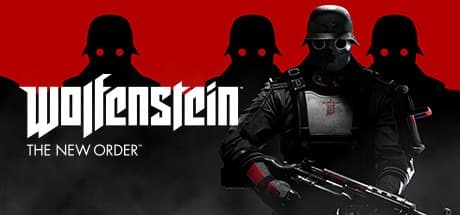
A campaign with a clear narrative direction
Wolfenstein: The New Order presents an alternate history in which the Nazi regime has won the war and extended its power through advanced technology. B.J. Blazkowicz joins a resistance effort against that world. The story is fictional, violent and intended for adults, with personal scenes and quieter conversations alongside large action sequences. Its structure is a sequence of authored chapters rather than a freely roaming open-world checklist.
That direction gives the game a different rhythm from a competitive shooter. You are following characters and situations, not building a multiplayer rank. Taking time to understand a location or listen to an exchange can be as important to the experience as clearing the next room. The campaign is designed for one player; it is not a cooperative adventure.
Read the room before choosing the approach
Some situations allow a quiet opening, while others move toward an overt firefight. Look at enemy positions, available cover and the path to the objective before exposing yourself. A hidden route may preserve resources, but a stealth attempt is not automatically successful because you equipped a quieter weapon. Position and timing still matter.
Commanders can call reinforcements when alerted, which gives reconnaissance a practical purpose. Dealing with an encounter's alarm structure can change the amount of resistance you face. If the plan breaks down, shift to cover and reassess rather than continuing a quiet approach that the enemies have already detected. The game supports adaptation, not only a perfect first attempt.
Balance firepower with control
Dual wielding offers an aggressive way to fight when the appropriate weapons are available. It also changes how you manage the encounter: greater immediate output is not a substitute for seeing where the next threat is coming from. Use the mode deliberately, and return to a more controlled arrangement when the situation benefits from it.
Health, armour and ammunition pickups encourage you to inspect the surroundings between exchanges. Do not assume that waiting behind cover restores every resource completely. A moment spent collecting supplies can prepare the next encounter better than immediately crossing another threshold while already depleted. Keep an eye on the information shown in the interface rather than relying on habits from another shooter.
Let progression reflect how you play
Perks are connected to actions and play styles, giving repeated use of particular techniques a longer purpose. Review their requirements when a benefit interests you, but avoid turning every scene into an artificial checklist. The campaign's dramatic flow can suffer if you constantly interrupt it to force a technique that does not suit the current room.
Exploration also reveals optional items and details. A short look around after the immediate threat is resolved can uncover useful supplies without losing the main objective. If you prefer a faster combat system built around movement and extracting resources from enemies, DOOM Eternal provides a contrasting style. The New Order places more weight on its characters and the alternation between infiltration and explosive action.
Interpret the Windows requirements in context
The original PC listing specifies a 64-bit system, 4 GB of RAM, graphics in the GeForce GTX 460 or Radeon HD 6850 class and 50 GB of storage. Its historical Windows 7 and Windows 8 entries do not establish compatibility with current storefront clients; Steam separately requires a newer supported Windows environment. Do not follow an old driver recommendation as though it were today's universal solution.
Check the exact edition and language availability before installation, especially when comparing regional offers. The Old Blood, The New Colossus and other series entries are different products. Preserve important saves before reinstalling, then test controls, image quality and saving in a short session before committing to a long chapter.